
Part 2 of my Spring Migration in Central Park series picks up where the journey left off. These are the mornings, the places, and the moments that made this spring unforgettable.
The Morning I'll Never Forget
One of the things I love about spring migration is that you never know when an ordinary morning is going to turn into something you’ll remember for years.
New to the series? Read Part 1 before continuing the journey.
This year started a little slow. People kept asking me, “How’s migration this year?” Some mornings were quiet, while others were pretty good, but I just kept reminding myself to be patient. That’s one thing migration teaches you. The birds don’t arrive on our schedule. They arrive on theirs.
Then came one morning I’ll never forget.
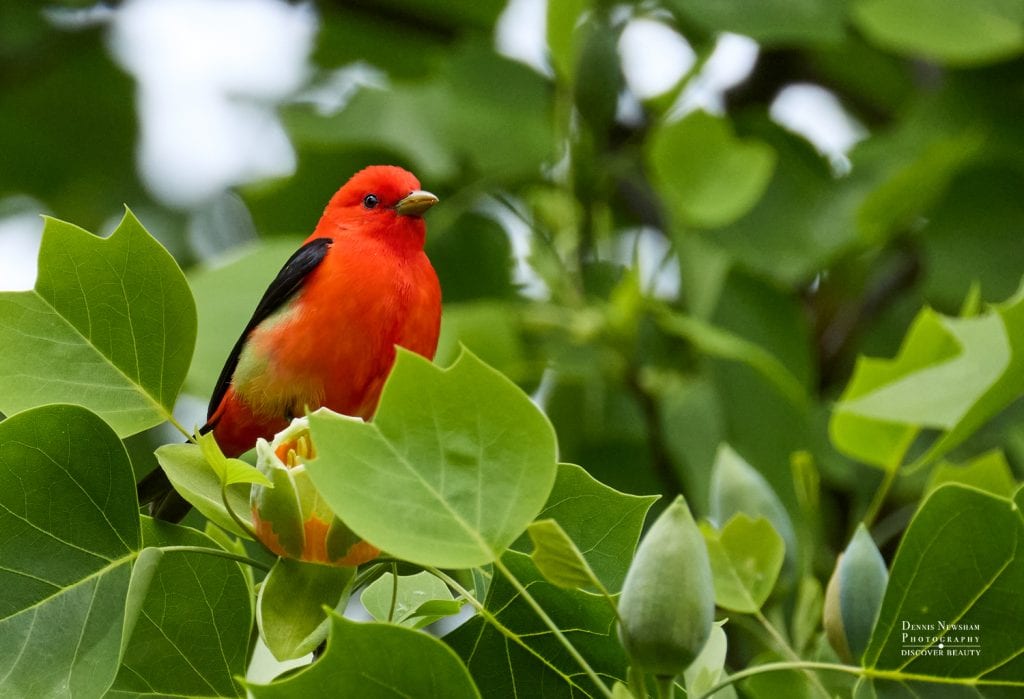
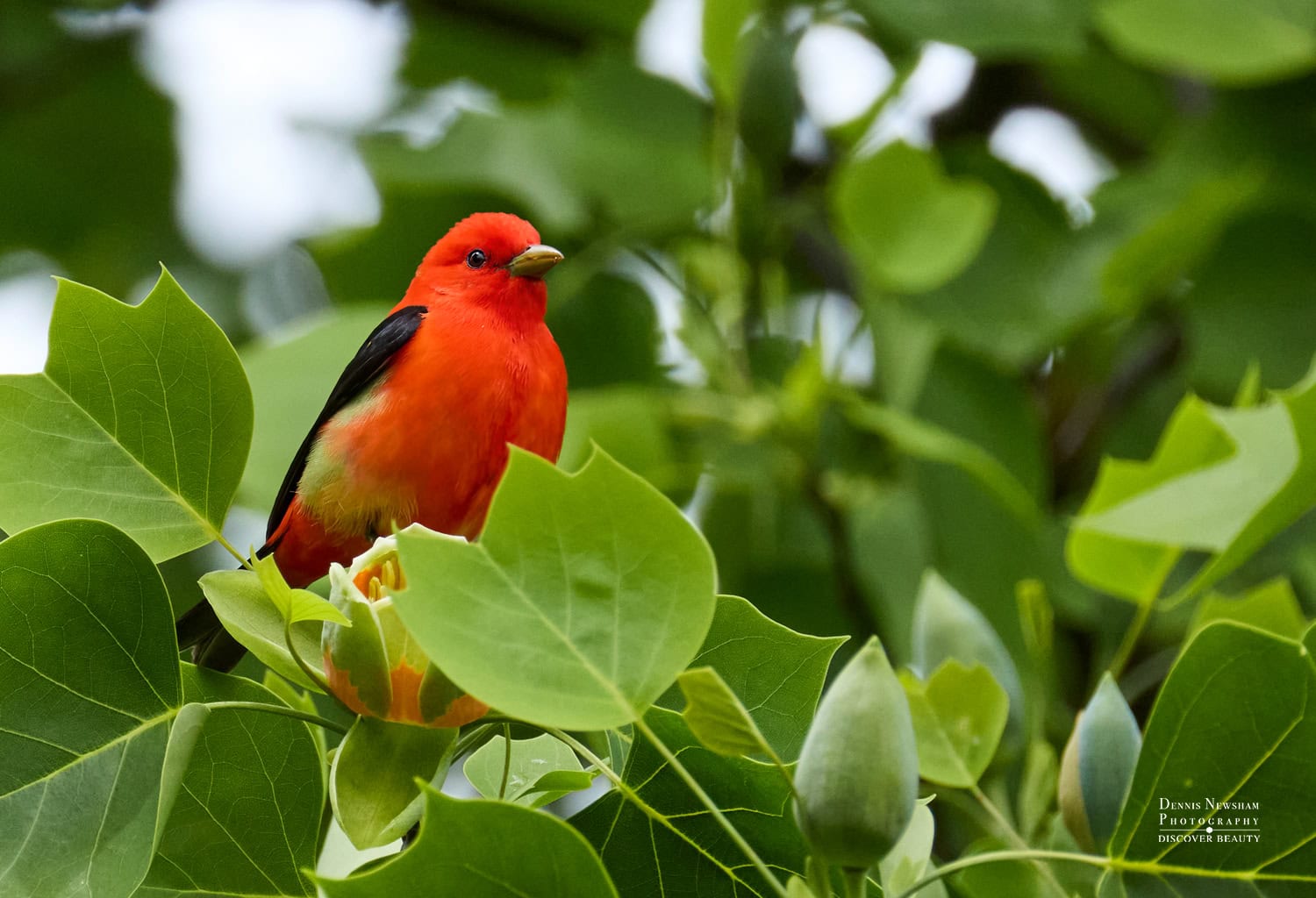
Earlier that morning, I had already seen a few Scarlet Tanagers in the big tulip tree. They were way up high in the canopy, and although they were beautiful to see, they weren’t the easiest birds to photograph. I figured it had already been a pretty good morning, so I kept walking through the northern part of the park toward the Pool and then the Loch.
As we were walking, I remember thinking, “Geez, I’m thirsty.”
It was getting hot.
I was starting to sweat.
Then… bingo.
It clicked.
If it was getting this hot, there was a good chance we’d have a termite hatch out.
Now I was paying even closer attention to everything around me.
As we came around the overlook above the Loch, all of a sudden I started seeing a lot more activity. Birds were flying in every direction, and then I noticed the tiny termites in the air.
We had a hatch out.
Then I looked up into one tree.
At first all I saw were flashes of bright red.
For just a split second, I always make myself slow down. Even after all these years, when you see that brilliant red, your mind wants to make sure you’re really seeing what you think you are. For that first instant you almost wonder, “Is that a male Northern Cardinal?” Of course, once you see the shape of the bird and those black wings, there’s no doubt.
Scarlet Tanager.
Then another.
Then another.
Before long we counted five males and three females feeding in the same tree.
I remember just smiling and thinking…
“No… this is cool.
This is migration.”
And they weren’t the only birds there.
Cedar Waxwings.
Yellow Warblers.
Black and White Warblers.
Black throated Blue Warblers.
It seemed like every bird in the neighborhood had found the same meal.
I started taking pictures as fast as I could while calling out what I was seeing.
“Male Scarlet Tanager!”
“Female Scarlet Tanager!”
“Black throated Blue!”
Pretty soon I could hear more and more voices behind me.
Birders were arriving from every direction.
People were talking.
Calling out birds.
Sharing what they were seeing.
As much as I enjoyed all of that, there comes a point as a wildlife photographer when I have to tune it out.
Not because I don’t enjoy the conversations.
I do.
But I know these moments don’t last very long.
The birds can disappear just as quickly as they arrived.
So I have to focus on the birds.
I’m watching where they’re landing.
I’m watching how they’re feeding.
I’m looking for good light.
A clean background.
That one pose that tells the story.
While all of that is happening, I’m still hearing the excitement around me, but it fades into the background while I concentrate on making the most of the opportunity.
Then, for just a second, another thought crossed my mind.
“What else is out there?”
That’s the funny thing about spring migration.
Even when you’re standing in the middle of one of the best mornings of the season, part of you is already hoping for another surprise.
Give me more.
More.
More.
Then I caught myself.
Dennis…
Look what’s right in front of you.
Eight Scarlet Tanagers feeding together in one tree.
Friends standing beside me.
People I’d known for years.
People I had just met.
Everyone smiling.
I finally looked away from my camera for a second.
One birder I’ve known for years is usually calm, quiet, and very matter of fact.
I looked over at her, and she had the biggest smile on her face.
I just smiled back.
We didn’t have to say anything.
We both knew we were watching one of those special migration moments that you’ll remember for a long time.
Then I heard someone behind me ask,
“Does this happen every day?”
It was one of the tourists who had stopped to see what everyone was looking at.
I smiled and said,
“No.
This is one of those special mornings.”
When I think back to that day, yes, I remember the Scarlet Tanagers.
But I also remember the excitement.
The conversations.
The smiles.
The friends I was standing with.
The visitors seeing spring migration for the first time.
That’s what stays with me.
The birds brought us together.
The moment is what I’ll always remember.
Letting the Day Unfold
One of the questions I get asked all the time is, “Where do you go during spring migration in Central Park?”
The truth is, I really don’t have one answer.
Every morning starts with a plan, but the birds usually have a plan of their own. Over the years I’ve learned not to chase a checklist. I like to let the day unfold in front of me. Sometimes I change direction because another birder mentions seeing a bird. Sometimes it’s because I hear a song coming from the trees. Other times I simply follow my curiosity.
This past May I found myself spending most of my mornings in the northern section of Central Park. I just like the chemistry of that part of the park. It feels different to me, and I always look forward to getting there.
I usually enter at 110th Street because it’s the quickest subway ride for me. As soon as I come out of the station, Harlem Meer is right there waiting.
I always stop.
The Meer is full of life. During this migration I have watched Ospreys circling overhead before diving into the water for fish. Red winged Blackbirds were defending their nesting territories, while Black crowned Night Herons and Green Herons quietly hunted along the shoreline. Earlier in the season there was even an American Bittern. Water attracts wildlife, and that’s one of the reasons I enjoy starting my mornings there. It wakes up my senses and reminds me that the day has only just begun.
From the Meer, I usually head into the Loch.
The mood changes almost immediately.
The Loch feels slower.
More secluded.
Almost secretive.
The waterfalls, the wooden bridges, and the heavy tree canopy make it feel like you’re a long way from the middle of Manhattan. I love that contrast. Sometimes the light can be challenging under the trees, but those same conditions can create some of my favorite photographs.
The Loch has given me so many memories. It’s where I photographed the Hooded Warbler this year. It’s where we experienced the termite hatch out with the Scarlet Tanagers. It’s also one of those places where birders naturally gather, sharing sightings and helping each other find birds.
I take a short break from the Loch and go to the Wildflower Meadow, which not far away.
I always enjoy walking through there because the mood changes again. It’s brighter and more open than the Loch. The birds often perch on the tall grasses and sing, and there’s something peaceful about stopping for a few minutes and simply listening.
From the Wildflower Meadow, I make my way to the Seep.
It doesn’t look like much when you first walk up to it, but over the years I’ve learned that birds love it. The water, the branches, and the cover make it a natural place for migrants to pause. Every time I visit, I slow down, listen carefully, and wonder what might be hiding in the branches.
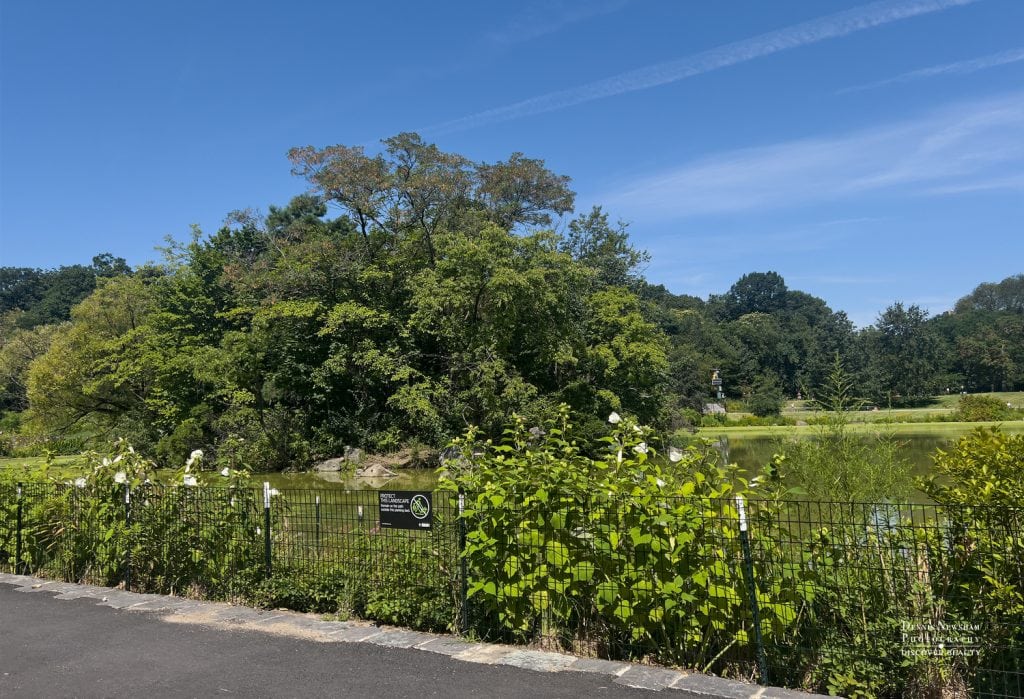
Eventually the trail brings me to the Pool.
I never skip the Bathing Rock.
You don’t have to spend a lot of time there. Sometimes all it takes is a quick glance to see if birds are dropping down to drink or bathe. While you’re watching the water, it’s easy to forget to look up. More than once I’ve been so focused on the rocks that birds were feeding right above my head.
That’s one of the things Central Park has taught me.
Always look up.
On the southern side of the Pool are some Bald Cypress trees. I always check them because I’ve photographed so many wonderful birds there over the years. The light often filters beautifully through the branches, and because of the shape of the trees, the birds can be surprisingly easy to see. Just as important, it’s another place where friends gather. Before long someone is asking, “How’s your morning going?” or “Have you seen anything exciting yet?” Those conversations become part of the day just as much as the birds.
From there I usually make my way toward Great Hill.
The famous tulip tree has become one of my favorite places to stop. Scarlet Tanagers, hummingbirds, and so many other migrants have passed through there over the years. The large rock overlooking the tree has become a gathering place for birders. Sometimes we’re sharing sightings. Sometimes we’re laughing. Sometimes we’re simply standing together, looking up into the trees, waiting to see what might appear next.
One of the things I love most about walking through Central Park is that every place has its own personality.
The Meer welcomes me into the park.
The Loch invites me to slow down.
The Wildflower Meadow encourages me to stop and listen.
The Pool reminds me to always look up.
Great Hill brings people together.
Every place has given me wonderful birds to photograph, but even more importantly, every place holds memories of the people I’ve shared them with.
Eventually, the walk usually ends the same way.
I’m hungry.
Even though I bring a snack, after walking five or six miles, sometimes even more, I know it’s time to head home.
Leaving is never easy.
There’s always that little voice in the back of my mind wondering if I’m about to miss the next great bird.
But that’s part of spring migration too.
Tomorrow is another day.
And another adventure is waiting.
What the Park Has Taught Me
When people think about birding, they often think about finding rare birds or adding another species to a list. For me, it’s become something much bigger than that.
Over the years, Central Park has taught me lessons that have very little to do with identifying birds. It has taught me how to slow down. How to listen. How to pay attention. Those lessons have made me a better birder and photographer, but I think they’ve also helped make me a better person.
One thing I don’t think people always notice about me is that, even when I’m talking, I’m listening.
I enjoy talking to people. I enjoy saying good morning and asking what they’ve seen. But while we’re talking, I’m paying attention to the little details. Somebody might casually mention they saw a Northern Water Thrush walking up a certain path. Another person might say the flowers at the Magic Bush aren’t blooming yet. Those little pieces of information stay with me. They help me understand what is happening in the park, and sometimes they completely change where I decide to go next.
Birding has always been about relationships for me.
Of course I remember the birds, but I also remember who I was with.
When I stop at the Pool, I don’t just remember photographing a Canada Warbler or watching Cedar Waxwings fly overhead. I remember standing there with friends, laughing, sharing sightings, and talking about our mornings. Every place in the park seems to hold a memory of someone I shared it with.
One of those memories happened this spring at the Seep.
Someone came hurrying down the trail saying a Hooded Warbler had been spotted.
You could feel the excitement spread almost instantly. Everybody started making their way toward the bird. The Seep can be challenging because it’s full of branches and cover, so finding a bird isn’t always easy. Once I located it, I started helping the people around me.
“Twelve o’clock.”
“About five feet off the ground.”
“Just to the right of that branch.”
I was trying to photograph the bird while helping another birder find it at the same time.
She kept saying, “I don’t see it. I don’t see it.”
Then, just as everyone was getting lined up…
The bird flushed.
At the time, nobody laughed.
Everyone let out the same disappointed groan because we all knew the opportunity had disappeared.
Looking back now, though, it makes me smile.
She wasn’t trying to scare the bird away.
She was simply caught up in the excitement, just like the rest of us.
Moments like that remind me how much people care and how much they want to share the experience together.
Birds have also taught me patience.
If you ask the people who know me best, they’ll probably tell you patience has never been one of my strongest qualities.
Birds don’t care about my schedule.
They come out when they’re ready.
They feed when they’re ready.
They sing when they’re ready.
If I want to photograph them, I have to slow down and respect that.
Some of the best birders I know taught me that wildlife always comes first. Give the birds space. Never interfere with what they’re doing. Observe. Wait. Respect them.
Those lessons stay with me every time I pick up my camera.
One morning this spring I almost talked myself out of going to the park.
The weather was cloudy.
There was a little rain.
It just didn’t feel like it was going to be a great birding day.
Still, I needed to get outside.
As I walked through the Ramble, I ran into a longtime birding friend. He’s one of the best spotters I’ve ever known. He’s quiet, always paying attention, and when he speaks, I listen because I know he has something worth saying.
He asked if I wanted to bird with him for a while.
Of course I said yes.
We weren’t seeing much at first, but neither of us seemed to mind. We were just enjoying being out there together.
Then everything changed.
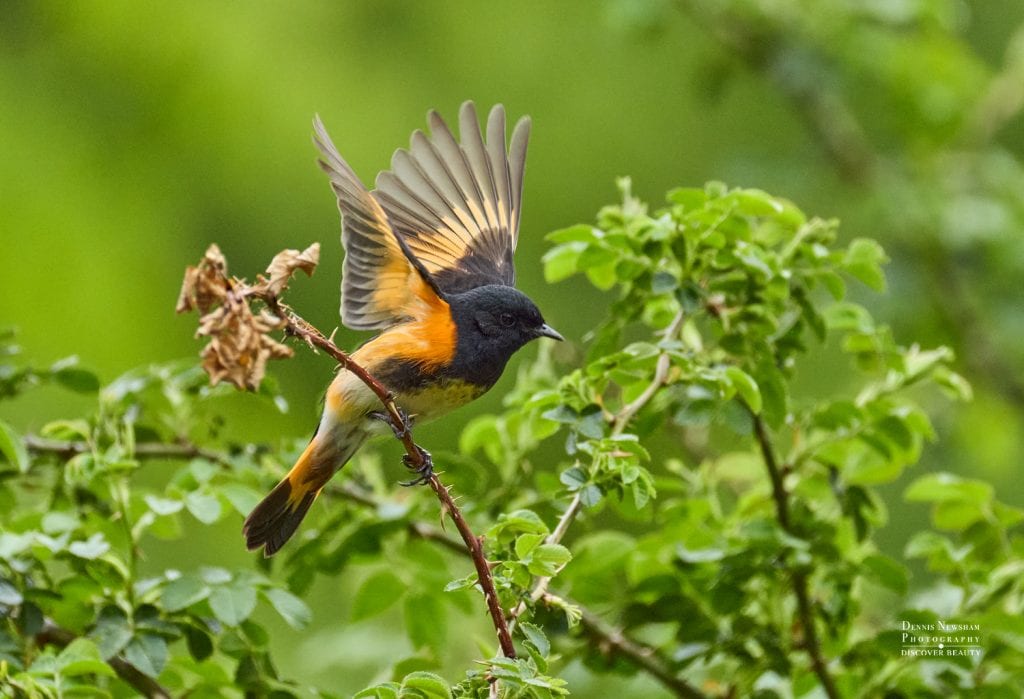
He spotted an American Redstart.
Some people might think, “It’s just an American Redstart.”
To me, it became the bird that made the whole day.
We found a bench nearby and spent time photographing it as it moved through the trees. I wasn’t thinking about the birds I hadn’t seen that day anymore. I was focused on the one bird that was right in front of me.
Those photographs still mean a lot to me.
Not because they show a rare bird.
Because every time I look at them, I remember the conversation, the friendship, and the quiet joy of sharing that moment together.
That’s one of the greatest lessons Central Park has taught me.
Don’t spend so much time thinking about what you might be missing that you forget to appreciate what’s right in front of you.
Photography has taught me something similar.
I don’t just look for birds anymore.
I look for light.
Sometimes I watch the sunlight moving through the trees before I ever raise my camera. Sometimes I choose a branch and quietly hope a bird lands there. Other times I simply wait because I know the light is dancing through the leaves, and sooner or later everything is going to come together.
Those moments can’t be rushed.
Neither can life.
When I think back on spring migration, I remember the birds.
But even more than that, I remember the people.
The conversations.
The friendships.
The mornings that didn’t go according to plan.
The unexpected moments that became unforgettable memories.
Over the years I’ve realized that Central Park hasn’t just given me photographs.
It has taught me to listen more carefully.
To be more patient.
To slow down.
To appreciate the moment I’m standing in.
And for that, I’ll always be grateful.